
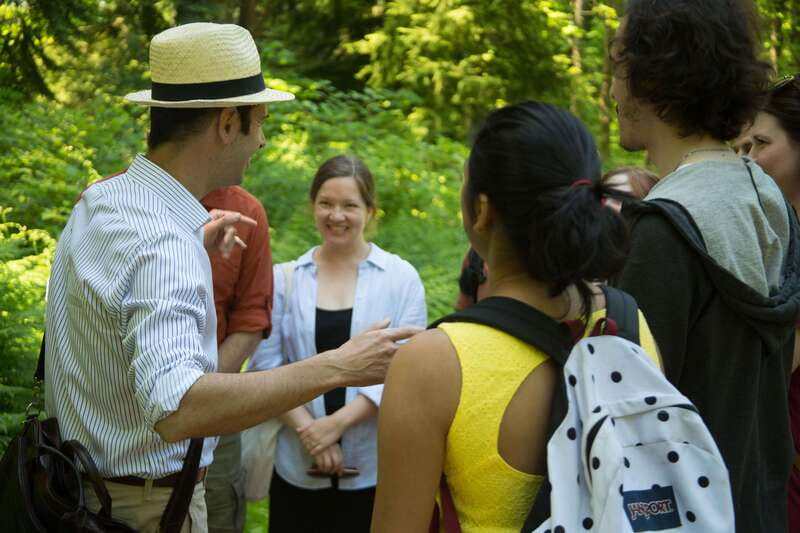
Reviewed · STANLEY PARK TOURS
Vancouver: The Dark Secrets of Stanley Park Tour
Stanley Park’s story is more complicated than its image as untouched rainforest. On this two-hour walk, you’ll hear about Coast Salish villages, government-led evictions, smallpox outbreaks and crimes connected to the park, all while walking beneath towering trees a short distance from downtown Vancouver.
I like two things in particular: the tour makes the park’s Indigenous history central, rather than treating it as a footnote, and it takes you along forest trails to places many people miss on a standard park visit. The mix of village sites, Deadman’s Island and the famous totem poles gives the walk a striking range.
One consideration: this is an adult-oriented history walk, with some mature subject matter, and it isn’t suitable for children under 10 or wheelchair users. The stories can be unsettling, too, so choose it for the history, not just for a pleasant woodland stroll.
Five things to know before you go
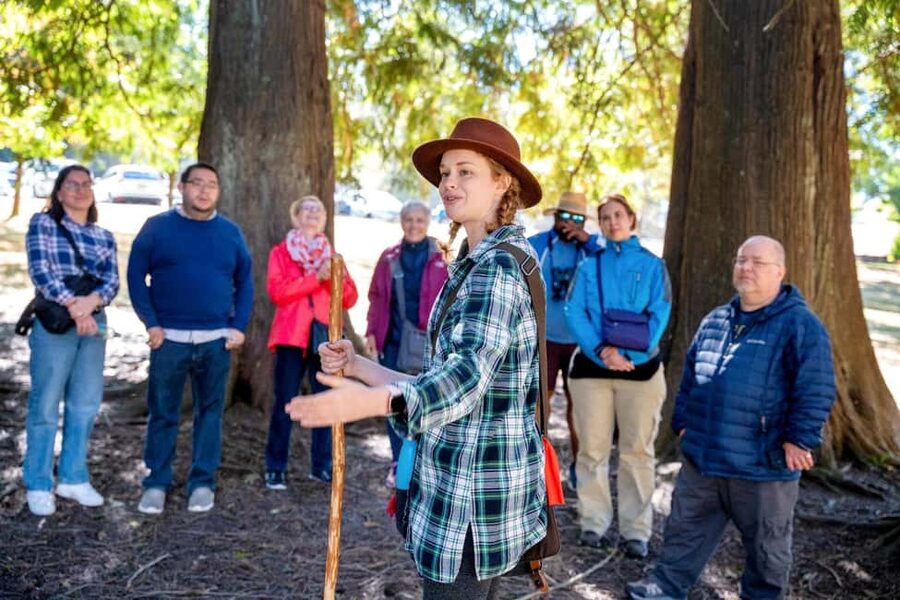
- Coast Salish village sites are part of the route. You’ll learn how Indigenous communities lived on this land and were pressured and forced to leave.
- Deadman’s Island has more than one story. The tour covers a Squamish legend and the island’s use as a pest house during 19th-century smallpox outbreaks.
- The forest trails are not the whole tour. You’ll also see the totem poles, seawall, hidden cemeteries and views of downtown and Lions Gate Bridge.
- True crime and mature themes are included. The recommended age is 14+, though children 10 and older can attend if their parents are comfortable with the content.
- Plan for two hours on foot. Wear comfortable shoes and weather-appropriate clothing, and bring water, a drink and sunscreen.
Starting at the Vancouver Aquarium
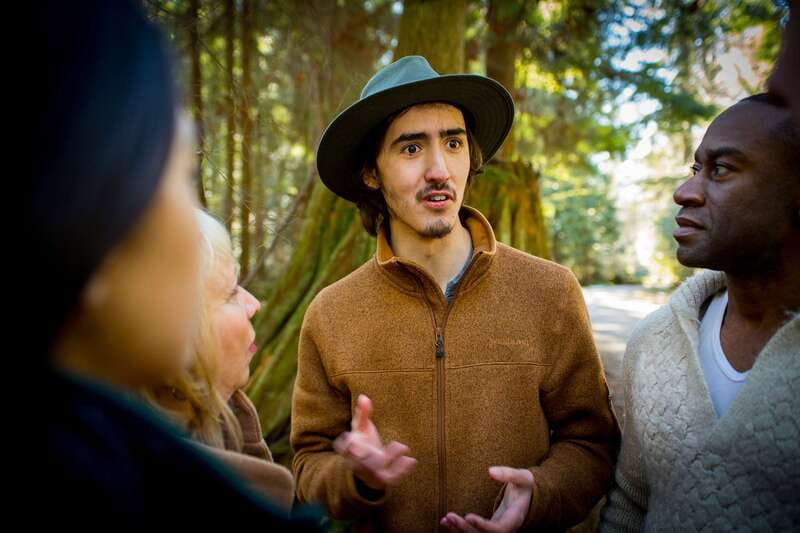
The meeting point is the whale sculpture outside the entrance to the Vancouver Aquarium, at 845 Avison Way in Stanley Park. It’s a clear landmark, but give yourself enough time to reach it and find the sculpture before the walk begins.
Your guide is described as a local Stanley Park expert and storyteller. Guides named by people who have taken the tour include Cole, Ashlyn and Glenn. The specific guide can vary, so treat those names as examples rather than a promise. What matters most here is the person leading the walk: the history depends on careful explanation, especially when the places you’re looking at offer few obvious clues.
The tour begins and ends at the Aquarium, which makes it easy to pair with other park plans. It lasts two hours, so it fits into a day without taking over the whole schedule. Still, it’s a proper walking outing, not a brief stop between attractions. Comfortable shoes and clothes suited to the weather will help you focus on the stories instead of your feet.
More Stanley Park tours around Vancouver:
- Vancouver City Sightseeing Tour: Granville Island & Stanley Park
★ 4.5 · 1,782 reviews - Vancouver Tour: Stanley Park, Granville Island & Capilano Bridge
★ 4.5 · 1,778 reviews - The Stanley Park Bicycle Tour by Cycle City Tours
★ 5.0 · 785 reviews
Leaving the familiar park paths
Stanley Park is often introduced as a huge green refuge beside the city. This walk asks you to look past that simple picture. You’ll head beneath large trees and along forested trails, including paths that are less commonly used by tourists.
That change of pace is part of the appeal. The trees and quiet trails give you a feel for the Pacific Northwest forest, while the guide connects the scenery to human history. The forest is not presented as an empty place that simply waited for a park to arrive. Coast Salish people lived here for millennia, and the tour points out sites of former villages that are easy to overlook today.
The walk’s emphasis on what is absent is useful. A village site may not announce itself with a sign or a preserved building, so a guide can help you understand what you are looking at and why the land matters. If you’re expecting a museum-style display at every stop, adjust that expectation: much of the value comes from listening and imagining the lives tied to these places.
The trail sections also mean you should be ready for an outdoor walk rather than a paved sightseeing route. The tour is not suitable for wheelchair users, and the information provided does not promise a fully accessible path. If mobility or footing is a concern, check directly with the operator before booking.
Facing the history of forced evictions
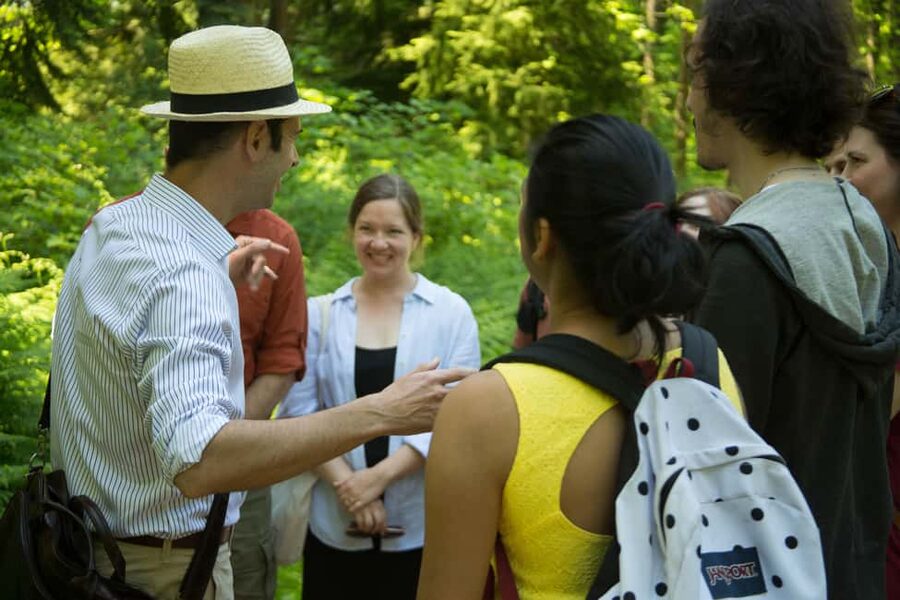
The most important part of the tour is its account of Coast Salish communities and the pressure they faced as the park took shape. The story includes efforts to remain on ancestral land and the government’s forced evictions. It is a necessary counterpoint to the popular idea that Stanley Park was simply an untouched forest set aside for public enjoyment.
That history can be difficult. It involves the removal of people from places where they had lived for generations, not just a change in park boundaries. The tour’s strength is that it gives this subject room alongside the park’s better-known sights. You’ll come away with a more complicated understanding of what the park represents and whose stories have too often been left out.
The tone is not likely to suit someone looking only for light entertainment. But if you want a guided visit that treats the park as a lived-in place with a contested past, this is the core reason to go. One participant, born and raised in Vancouver, was surprised by how much of the history was new to them. That is a good sign for locals as well as first-time visitors: familiarity with the park does not mean you know its full story.
Deadman’s Island and the park’s darker chapters
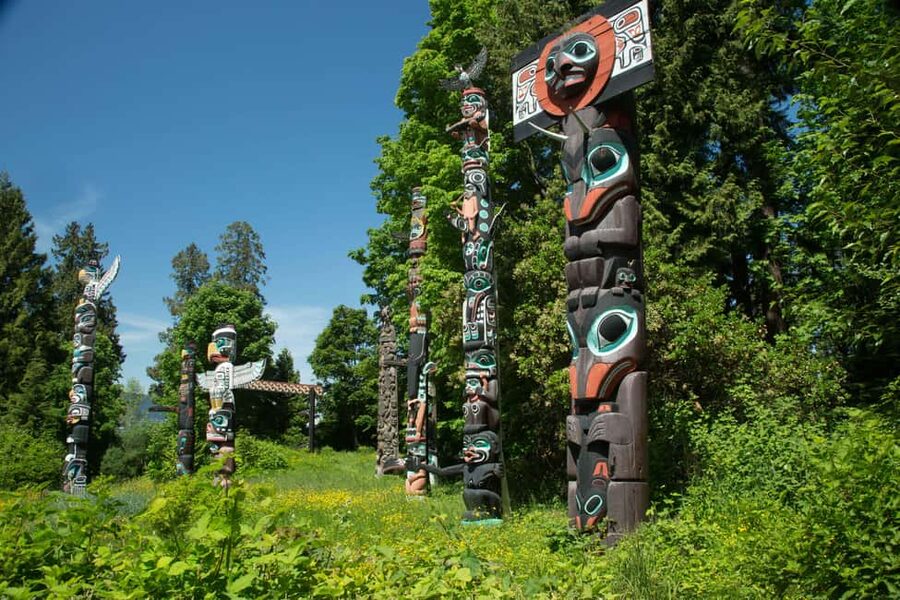
Deadman’s Island brings together legend and documented history. You’ll hear a Squamish story about an ancient war, then learn how the island was used as a pest house during smallpox outbreaks in the 1800s. The combination gives the stop a different kind of weight: it is both a place with cultural meaning and a setting connected to disease and death.
The name alone might suggest a spooky stop, but the value lies in the context. The island’s past is linked to wider histories of illness and Indigenous communities, not just eerie atmosphere. Expect the guide to tell stories that can be unsettling, rather than to turn the place into a haunted-house attraction.
The tour also includes secret cemeteries and what are described as ghost stumps. These details add texture to a park many people know mainly for its trees and seawall. The provided information does not specify the exact cemetery sites or the number of stops, so think of them as elements in a two-hour story-led walk, not a fixed checklist you can explore independently afterward.
Same city, a different kind of day:
- Vancouver Half-Day Whale Watching Adventure with Free Photos
★ 5.0 · 5,000 reviews - Big Bus Vancouver Hop-On Hop-Off Sightseeing Tour
★ 3.5 · 3,028 reviews - Victoria & Butchart Gardens Tour with Ferry from Vancouver
★ 4.5 · 2,703 reviews - Vancouver: Covered Whale Watching Adventure with Free Photos
★ 4.8 · 2,260 reviews
Totem poles, seawall and city views
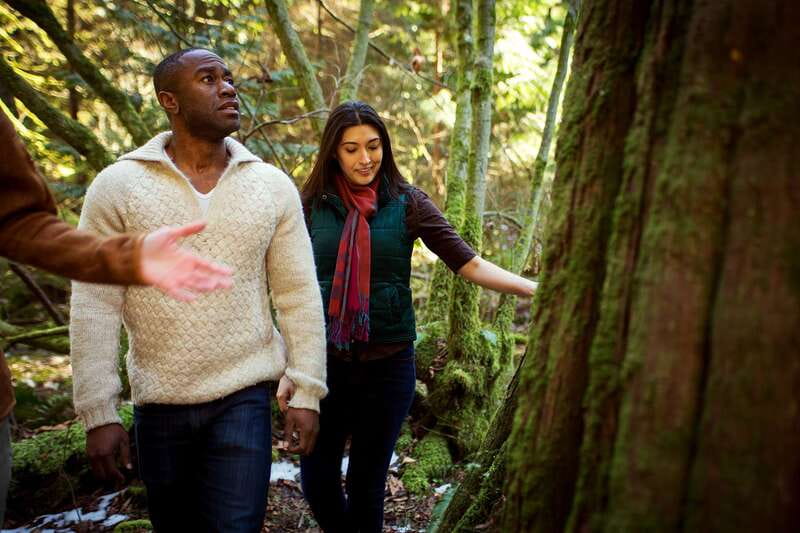
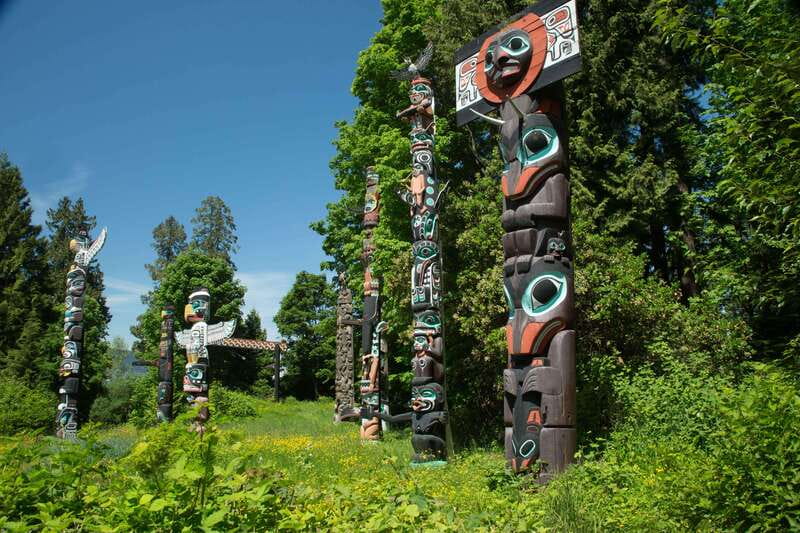
The world-famous totem poles are among the park’s best-known sights, and they give the walk a more familiar landmark after its lesser-known historical stops. Here, the guide can connect a popular photo stop to the wider stories of Indigenous presence and the park’s past.
You’ll also reach the seawall and take in views toward downtown Vancouver and Lions Gate Bridge. These open views provide a welcome contrast to the forest trails, and they help you see how close the park sits to the city. The route brings together two versions of Stanley Park: a place of striking natural scenery and a place shaped by people, policy and difficult events.
This variety is a real advantage if you have limited time in the park. Instead of spending two hours only on scenery or only on historical interpretation, you get both. The trade-off is that you should not expect a long, unhurried visit at every landmark. The walk has a broad story to tell, and the guide will keep things moving.
The guide matters more than the map
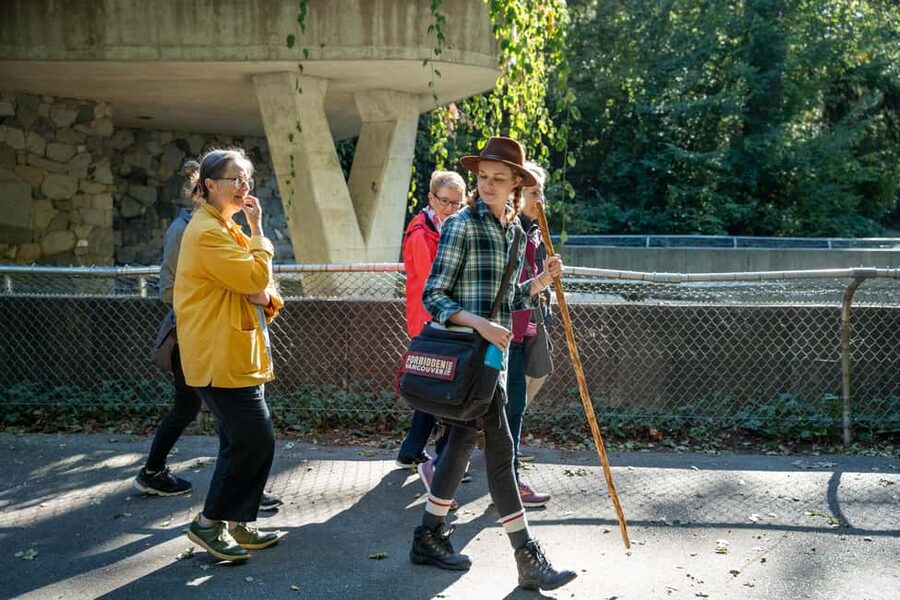
This is a storytelling tour, so the guide is central to the experience. The strongest feedback about the walk highlights guides who are engaging, well prepared and able to hold attention while covering serious material. Cole, Ashlyn and Glenn are among the names associated with past tours. Their reported strengths range from clear storytelling to a friendly manner, but you cannot count on a particular person leading your departure.
That personal element suits the subject. A village site or cemetery can be easy to pass without context; a good guide helps you see why it matters. The tour also covers several different kinds of history, from Indigenous displacement to true crime, so a clear narrative helps the subjects fit together rather than feel like a list of dark curiosities.
The guide’s approach is especially important if you’re bringing a child. The tour is designed for adults and has an age recommendation of 14+. Children aged 10 and older may attend if their parents are comfortable with mature themes. Under-10s are not suitable. Use that guidance honestly: the presence of trees and scenic views does not make this a children’s nature walk.
Is $28 good value for two hours?
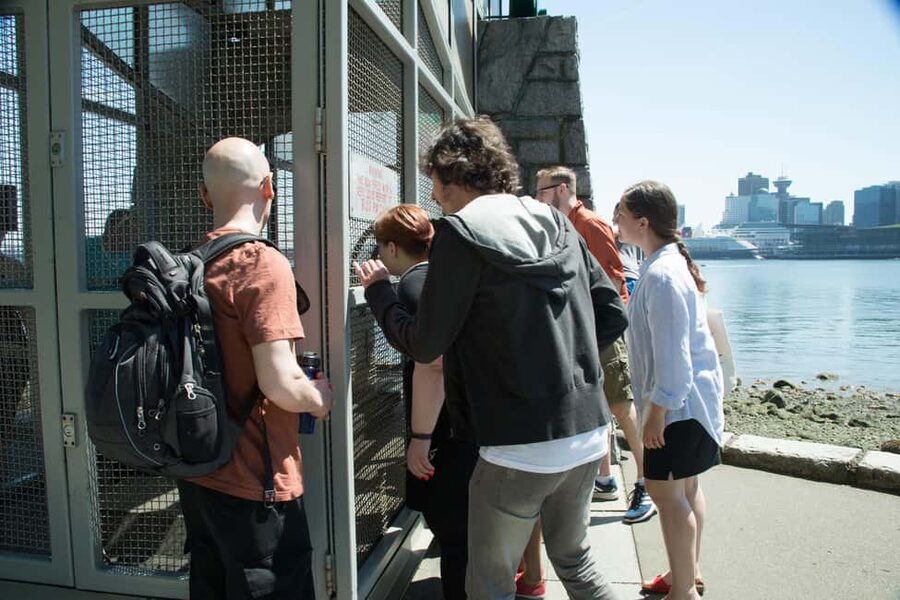
At $28 per person, the tour offers a focused way to understand a park that many people visit without learning much about its past. You’re paying for an intimate guided walk with a local expert, not entry to a separate attraction or a long list of included extras. The value comes from the guide’s interpretation and from reaching sites whose significance may not be obvious on your own.
For a first visit to Vancouver, I’d consider it worthwhile if you want more than a scenic stroll. It is also a good choice for locals who know the usual park sights but want a deeper account of the land and its history. If you already plan to walk Stanley Park on your own, the tour adds a different kind of value: it helps you notice what the scenery alone cannot explain.
The price makes less sense if you want a quiet, easy walk with minimal serious content. The tour includes forced evictions, smallpox and crime stories, and it takes place on forest trails. You’re paying for a particular kind of experience, not simply access to the park.
Booking can remain flexible: you can reserve now and pay later, and cancellation is free up to 24 hours in advance for a full refund. The tour is in English. Pets are not allowed. Bring comfortable shoes, water or another drink, sunscreen, weather-appropriate clothes and cash. The stated health guidance asks anyone who feels ill, or has been in contact with someone ill during the previous two weeks, not to attend.
Who should book this walk?
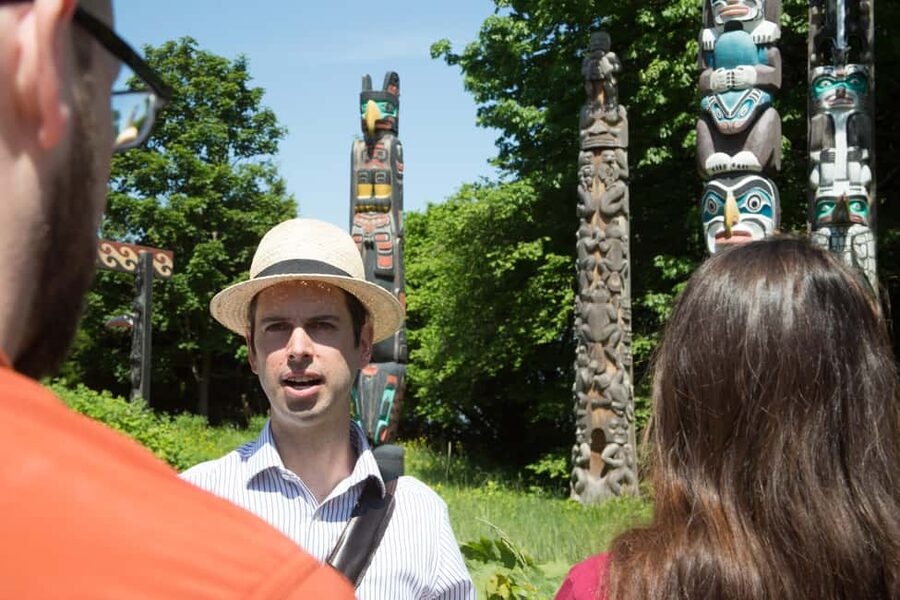
Book it if you want a more thoughtful visit to Stanley Park, especially if Indigenous history, local storytelling and true crime interest you. It suits adults, older teens and curious Vancouver locals who are willing to spend two hours walking and listening. The combination of forest, village sites, cemeteries, totem poles and city views gives the outing a distinctive shape.
Skip it if you need wheelchair access, are bringing a child under 10, or want a light family walk without mature subject matter. And if your main priority is simply to see the totem poles or walk the seawall, you can visit those sights without a guide.
For everyone else, this is a good way to trade a familiar park loop for a more revealing one. You’ll still get trees and views, but you’ll also leave with a clearer sense of the people and events that the park’s postcard image leaves out.
FAQ
Where does the tour meet?
Meet at the whale sculpture outside the entrance to the Vancouver Aquarium, at 845 Avison Way in Stanley Park.
How long is the tour?
The walking tour lasts two hours and ends back at the Vancouver Aquarium.
What is the price?
The price is $28 per person.
What language is the tour in?
The tour is conducted in English.
What will I see on the tour?
The walk includes forest trails, sites of former Coast Salish villages, Deadman’s Island, secret cemeteries, the totem poles, the seawall, ghost stumps, crime-scene locations and views of downtown Vancouver and Lions Gate Bridge.
Can children attend?
The tour is designed for adults, with a recommended age of 14+. Children aged 10 and older can attend if their parents are comfortable with mature subject matter. Children under 10 are not suitable.
Is the tour suitable for wheelchair users?
No. The tour is listed as unsuitable for wheelchair users.
What should I bring?
Wear comfortable shoes and clothes suited to the weather. Bring water, a drink, sunscreen and cash.
Can I cancel or reserve without paying immediately?
You can cancel up to 24 hours in advance for a full refund. A reserve-now, pay-later option is also available.
Just added around Vancouver
- Vancouver to Seattle Private Transfer Service★ 5.0 · 3 reviews
- Vancouver Private Tour★ 5.0 · 3 reviews
- Private Vancouver Sightseeing Adventure: spy game Secret Mission★ 5.0 · 9 reviews
- Vancouver City Sightseeing Adventure: spy game Secret Mission★ 4.5 · 23 reviews
- Vancouver Signature Highlights Open Air Roadster Tour★ 5.0 · 7 reviews
- Vancouver 1-Day Tour (Granville Island/Stanley Park) (Chn&Eng)★ 4.5 · 9 reviews
- Shore Excursion: Vancouver & Granville Island City Sights Tour★ 5.0 · 7 reviews
- Vancouver Jet Ski Rental from Granville Island★ 5.0 · 14 reviews
Stanley Park Tours, compared.

Vancouver City Sightseeing Tour: Granville Island & Stanley Park
Read our review →
Vancouver Tour: Stanley Park, Granville Island & Capilano Bridge
Read our review →
The Stanley Park Bicycle Tour by Cycle City Tours
Read our review →
Sunset Bus Tour: Stanley Park & English Bay Photostops
Read our review →Browse the lists this tour appears in