
Reviewed · VANCOUVER WALKING TOURS
Ancient Trees of Vancouver Walking Tour
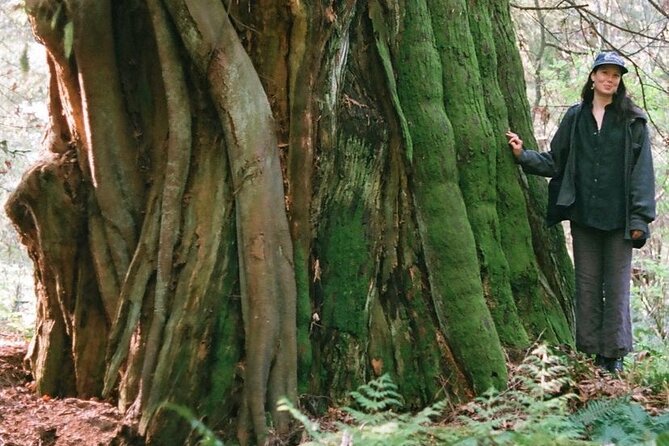
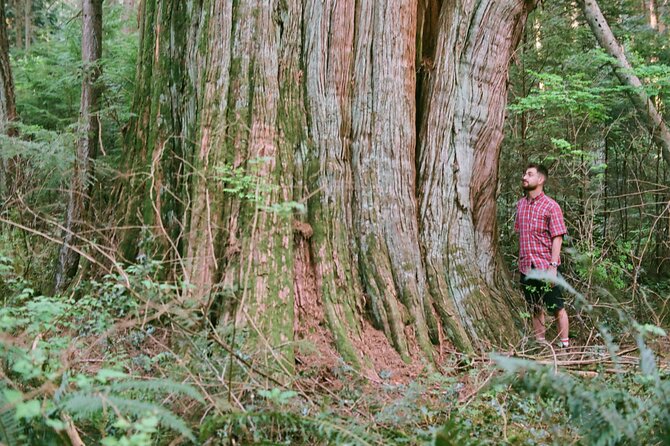
Stanley Park holds trees that were already centuries old before Vancouver became a city. On this three-hour walk, you get close to ancient western red cedars and Douglas firs, with tree expert Colin Spratt helping you read the forest rather than simply pass through it.
I like two things especially: the small group, capped at 10, leaves room to stop and ask questions, and the old maps, photographs and 120-year-old postcards give the park’s past a human scale. The walk also connects the trees to the Coast Salish people who lived here long before the park became part of an urban city.
One consideration: this is a three-hour walking tour, not a quick park introduction. It suits you best if you’re happy to spend a good part of the day on forest trails, listening and looking closely.
What makes this Stanley Park walk different
- Trees measured in centuries: See western red cedars described as up to 1,000 years old, along with Douglas firs around 600 to 800 years old.
- A rare city forest: The walk focuses on remaining old-growth trees inside Vancouver’s historic Stanley Park.
- A guide with a specialist’s eye: Colin Spratt is a big-tree seeker and a member of the BC Big Tree Committee.
- History you can hold in your hands: Old maps, photographs and 120-year-old postcards help explain how the park and city changed.
- A small party and flexible time: Groups are limited to 10, with morning and afternoon departures.
- A nature walk with a wider story: Learn about forest ecology, conservation threats and the Coast Salish people’s long relationship with this place.
Meeting ancient trees in the middle of Vancouver
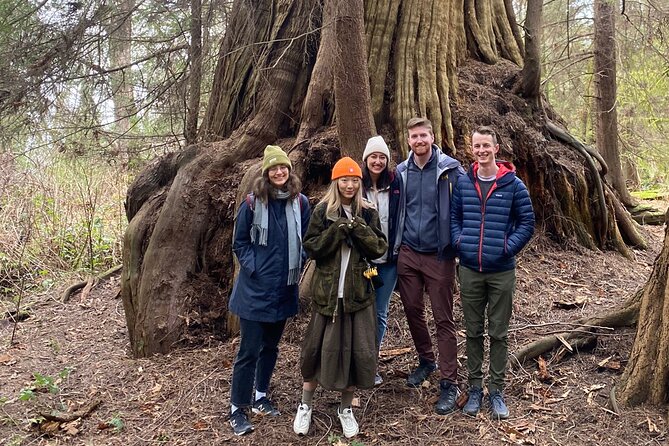
Stanley Park is famous for its waterfront paths and city views, but this walk takes you away from the usual quick loop and toward some of the park’s oldest living residents. The headline trees include giant western red cedars, tall Douglas firs and what the tour describes as Canada’s largest known maple tree.
The ages given for individual trees vary in the tour description, from roughly 600-year-old firs to cedars estimated at 1,000 years or more. Those figures make the scale plain: some trees began growing long before Vancouver existed as a modern city. You are not just seeing large trunks; you are looking at living witnesses to centuries of change.
Colin’s role is to help you notice what a casual walk can miss. The tour centers on identifying and understanding the trees, with explanations of their ecological importance and the pressures old-growth forests face today. If you already enjoy trees, you’ll have plenty to think about; if you don’t, this is the sort of walk that can change how you look at a forest.
This is also a useful choice if you want a nature experience without leaving Vancouver. You spend three hours in Stanley Park, where urban life and old forest exist side by side. The contrast is part of the appeal: these trees are not in a distant wilderness, but in a city park with a long and complicated human history.
More walking tours around Vancouver:
- Gastown Historic Walking Food Tour
★ 5.0 · 1,863 reviews - Vancouver Lost Souls of Gastown Walking Tour
★ 5.0 · 1,273 reviews - A Wok Around Chinatown: Culinary and Cultural Walking Tour Led by a Chef
★ 5.0 · 610 reviews
A three-hour walk, not a drive-by
The entire activity takes place in Stanley Park, starting and ending at Ferguson Point, at 7501 Stanley Park Drive. There is no pickup or drop-off, so you’ll need to make your own way to the meeting point. The tour itself lasts about three hours and includes walking along park trails.
The pace is built around stopping to look, listen and talk. That matters with old trees, which reveal their character slowly. A trunk’s shape, a hollow, or the way new growth takes hold on an older tree can all become part of the story when your guide knows where to direct your attention.
The description highlights easy walking trails, and the activity information says most people can participate. Still, three hours on foot is a real commitment, so consider your comfort with a longer walk before booking. If you have a question about a particular mobility need, check with the operator before you reserve.
Morning and afternoon tours give you some flexibility when fitting the walk into a Vancouver visit. The group limit of 10 is a practical advantage: it keeps the experience from feeling like a parade through the woods and makes it easier to hear the guide and ask questions.
Colin Spratt’s forest stories
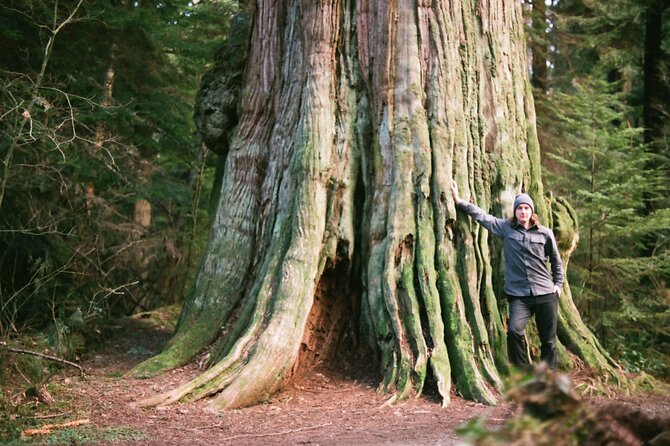
Colin Spratt is identified as a well-known big-tree seeker and a member of the BC Big Tree Committee. The tour leans on his expertise, but it is not only a lesson in tree names or measurements. The stories connect the forest to Vancouver’s development, the history of Stanley Park and the people who lived in the region long before it became a city park.
That human context is important. The Coast Salish people have called this area home for thousands of years, and the cedar has long been central to daily life. The tour’s stories include how cedar wood was used for longhouses and canoes, while its bark supplied material for clothing and rope. You come away with a clearer sense that the forest is not simply scenery, but part of a living cultural history.
Colin also uses historical materials to make the past more tangible. Old maps, photographs and postcards dating back about 120 years help you picture the park as it changed over time. These visuals can be especially helpful if you enjoy history but don’t want to spend your whole visit indoors at a museum.
The style is personal and narrative, with local history, natural science, legends and anecdotes woven together. If you prefer a quiet walk with little commentary, this may not be your ideal outing. If you like asking questions and hearing the stories behind what you see, the guide is a central part of the value.
What you learn by looking closely
The biggest trees are the obvious draw, but the tour’s ecological explanations give the walk more substance. You’ll hear why old-growth forests matter and what threats they face. Rather than treating a tree as a single object, the guide frames it as part of a system that includes other trees, new growth and the forest floor.
One striking idea shared on the walk is the role of nurse logs. A fallen tree can become the place where new plants take root, so what looks like decay also supports fresh growth. You may see several generations of trees living in close succession, with younger growth rising from the remains of older trees.
The tour also explores hollow cedars and the ways old trees can offer shelter to wildlife. Some cedar trunks become hollow as they age, yet the tree can continue to live. The contrast between a tree’s apparent damage and its endurance makes for a memorable lesson in how forests work.
You’ll also hear how the age of trees is estimated and what to notice in their forms. Ancient cedars can develop unusual branching shapes at their crowns, while their trunks may be broad, hollow or weathered. These details help you understand why a tree’s story is not told by its height alone.
The conservation thread gives the walk present-day relevance. These trees have survived for centuries, but that does not make old-growth forests invulnerable. Learning about their ecological importance and the threats they face adds a thoughtful note to the experience, without turning it into a lecture detached from the place.
Same city, a different kind of day:
- Vancouver Half-Day Whale Watching Adventure with Free Photos
★ 5.0 · 5,000 reviews - Big Bus Vancouver Hop-On Hop-Off Sightseeing Tour
★ 3.5 · 3,028 reviews - Victoria & Butchart Gardens Tour with Ferry from Vancouver
★ 4.5 · 2,703 reviews - Vancouver: Covered Whale Watching Adventure with Free Photos
★ 4.8 · 2,260 reviews
What the price includes, and what it buys you
At $56.33 per person, the price covers a guided walking tour, the expert guide and the use of historical maps, photographs and postcards as part of the storytelling. There is no separate admission ticket for Stanley Park listed, and pickup and drop-off are not included.
The value comes less from access to the park, which you can visit on your own, and more from knowing what to look for once you’re there. A self-guided walk may take you past the same trees, but it won’t necessarily reveal their age, ecology, cultural uses or place in Vancouver’s history. The small group and specialist guide make the difference between a stroll and a focused forest visit.
Three hours is a generous amount of time for one activity, so consider how you want to spend your day. If you have only a short stop in Vancouver or would rather cover several attractions quickly, this may be too much time for a single park walk. If you enjoy a slower outing with plenty of context, the length gives the stories room to develop.
The tour is recommended by all of the 225 people who have rated it, with an overall score of 5 out of 5. That is an unusually consistent response, and the praise centers on Colin’s passion and ability to combine natural science, history and humor. The practical takeaway is that the guide is not an add-on to the experience; he is a key reason to book it.
Who will enjoy the walk most
This is a strong fit for nature lovers, tree enthusiasts and anyone curious about the relationship between Vancouver and Stanley Park. You don’t need to arrive with a background in ecology. The walk is designed to make the forest legible, and its combination of visual details and stories gives newcomers plenty to follow.
It can also work well for families. The tour information says most people can participate, and the walk has been enjoyed by families with children aged 7 to 11. A child who likes asking questions, noticing details and spending time outdoors is more likely to stay engaged than one who wants a fast-moving attraction.
History-minded visitors should find plenty beyond the trees. The park’s origins, the city’s development, Coast Salish connections and historical images broaden the subject. If your usual sightseeing routine is museums and architecture, this is a welcome change of pace without asking you to leave the city.
On the other hand, this may not be the best pick if you want a short, casual stroll, prefer to explore in silence, or have no interest in spending three hours on trails. It is also not a transport service: you need to reach Ferguson Point yourself and return there at the end.
A few useful details before you book
The tour is offered in English, and mobile tickets are available. Group discounts are listed, though the amount and conditions are not specified. Morning and afternoon departures provide options, but you’ll need to check availability for your preferred date.
The meeting point is Ferguson Point in Stanley Park, and the walk ends back there. Service animals are allowed. Confirmation is provided at booking.
Free cancellation is available up to 24 hours before the experience begins. If you cancel less than 24 hours before the start time, the payment is not refunded, and changes made inside that same window are not accepted.
Should you book the Ancient Trees of Vancouver tour?
Book it if you want to see Stanley Park with a sharper eye and are willing to give the experience three hours. The strongest reasons are the ancient cedars and firs, the small group, and Colin Spratt’s mix of tree expertise, local history and conservation insight. The old photographs and postcards add a thoughtful visual layer to what could otherwise be a simple walk.
Skip it if you’re pressed for time or mainly want to cover the park on your own. But if you’re curious about what makes these trees ancient, how they support new life, and how the forest connects to Vancouver’s past, this is a worthwhile use of a morning or afternoon.
FAQ
How long is the Ancient Trees of Vancouver tour?
The walk lasts about three hours.
Where does the tour begin and end?
It starts and ends at Ferguson Point, 7501 Stanley Park Drive, Vancouver.
How many people can join the tour?
The maximum group size is 10 participants.
What kinds of trees will I see?
The tour features ancient western red cedars, towering Douglas firs and the largest known maple tree in Canada.
Who leads the walk?
The guide is Colin Spratt, a big-tree seeker and member of the BC Big Tree Committee.
Is the tour offered at different times of day?
Yes. Morning and afternoon tours are offered.
What is included in the price?
The price includes the walking tour, an expert guide and historical maps, photographs and postcards used to tell the story. Pickup and drop-off are not included.
Just added around Vancouver
- Vancouver to Seattle Private Transfer Service★ 5.0 · 3 reviews
- Vancouver Private Tour★ 5.0 · 3 reviews
- Private Vancouver Sightseeing Adventure: spy game Secret Mission★ 5.0 · 9 reviews
- Vancouver City Sightseeing Adventure: spy game Secret Mission★ 4.5 · 23 reviews
- Vancouver Signature Highlights Open Air Roadster Tour★ 5.0 · 7 reviews
- Vancouver 1-Day Tour (Granville Island/Stanley Park) (Chn&Eng)★ 4.5 · 9 reviews
- Shore Excursion: Vancouver & Granville Island City Sights Tour★ 5.0 · 7 reviews
- Vancouver Jet Ski Rental from Granville Island★ 5.0 · 14 reviews
Vancouver Walking Tours, compared.

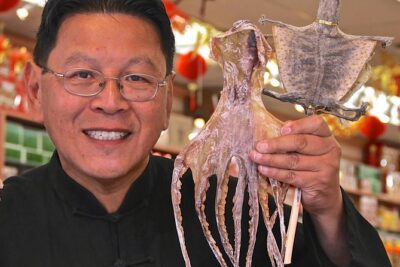
A Wok Around Chinatown: Culinary and Cultural Walking Tour Led by a Chef
Read our review →
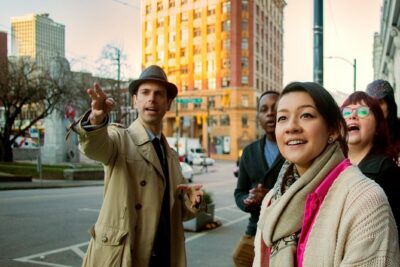
The Forbidden Downtown and Gastown Walking Tour
Read our review →
Gratuity-Based Vancouver City Highlights 3 Hour Walking Tour
Read our review →
Experience Gastown Vancouver’s Elite Walking Food Tour
Read our review →Browse the lists this tour appears in